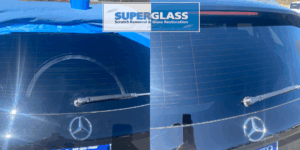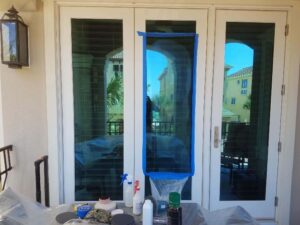
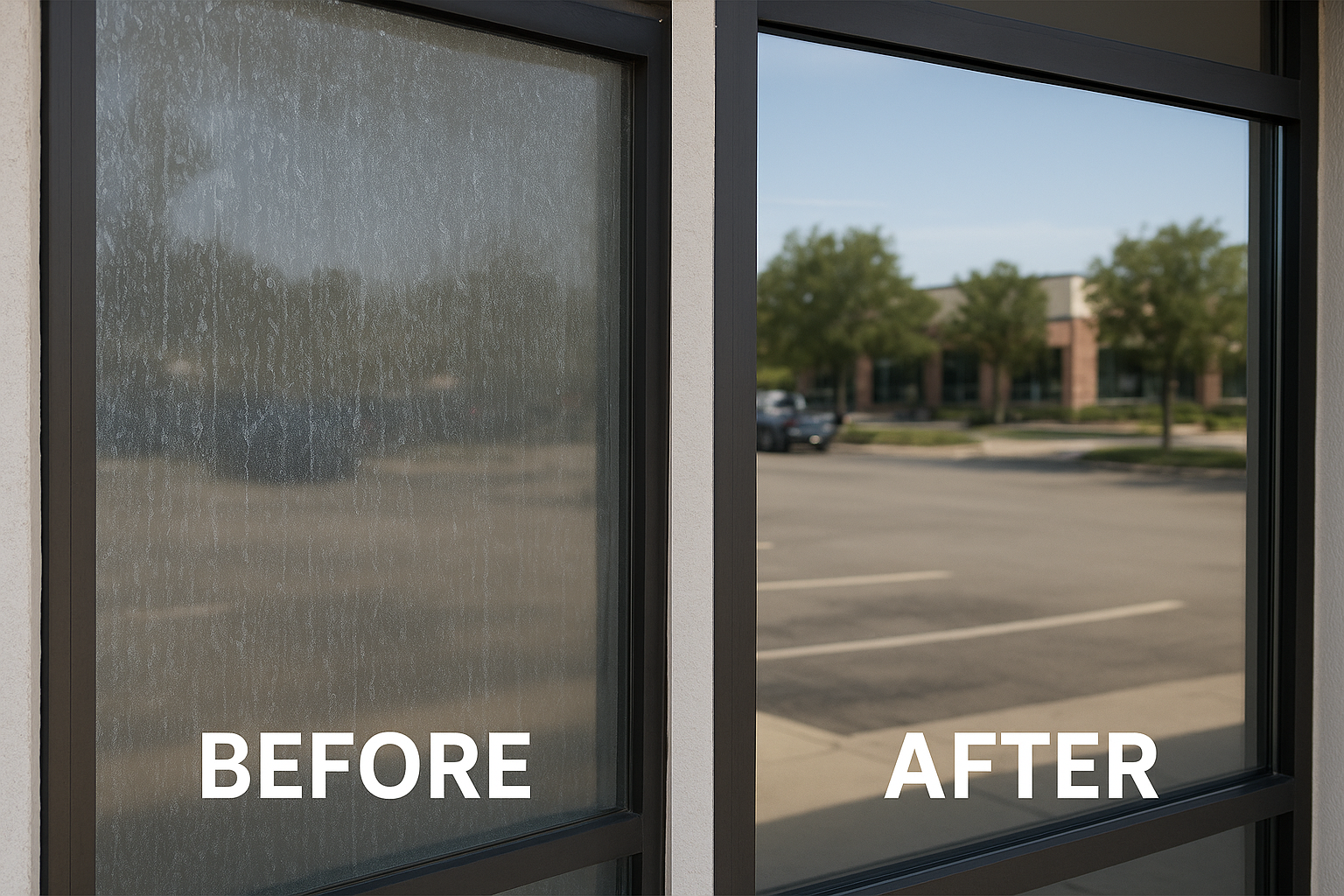
Hard water stains are annoying—but hard water scratches are even worse. Over time, minerals in hard water can create stubborn marks on windows, shower doors, mirrors, and even auto glass. If left untreated, these scratches can dull the clarity of the glass and make it look permanently damaged.
The good news? Many hard water scratches can be removed, especially when you use the right methods. This guide will explain what causes hard water scratches, what you can fix yourself, and when you need a professional.
⭐ What Causes Hard Water Scratches?
Hard water is high in minerals like calcium and magnesium. When droplets dry on a glass surface, they leave behind white, cloudy deposits. These hard minerals create:
Etching (dull areas where minerals chemically damage the surface)
Scratches (physical grooves caused by wiping mineral deposits with rough cloths, sponges, or brushes)
Water spot buildup that worsens over time
The combination of mineral deposits + abrasive cleaning can easily cause light to moderate scratches.
✔️ Can Hard Water Scratches Be Removed?
Yes—most light to moderate scratches can be removed using specialized glass-polishing techniques.
However:
Light scratches → Usually repairable with polishing
Moderate scratches → Often repairable, but need professional tools
Deep scratches or etching → May not be fully removable and could require glass replacement
The key is identifying the severity early.
DIY Methods to Reduce or Remove Hard Water Scratches
Before calling a professional, you can try reducing the appearance of light scratches using safe, at-home options.
1. Baking Soda & Water Paste (Good for Light Surface Marks)
This method doesn’t remove deep scratches, but it can help with mineral residue buildup that looks like scratching.
How to use it:
Mix equal parts baking soda + water.
Apply paste to the glass in circular motions.
Rinse thoroughly and dry.
Great for shower doors, mirrors, and windows.
2. Vinegar + Distilled Water (Removes Mineral Deposits, Not Scratches)
Vinegar dissolves mineral buildup, but it does not polish actual scratches. Use it before attempting scratch removal.
Steps:
Spray solution (50% vinegar / 50% water)
Let sit 5–10 minutes
Rinse and wipe clean
This helps you see the true condition of the glass.
3. Cerium Oxide (Best DIY Option for Real Scratch Removal)
This is the same polishing compound the pros use, but using it correctly is tricky.
You’ll need:
Cerium oxide powder
Water
A polishing pad and drill
Process:
Create a slurry with powder + water
Apply to glass
Polish with slow, steady, overlapping motions
Wipe clean and inspect
⚠️ Warning: If you polish unevenly, you can distort the glass (known as “lensing”). For anything beyond light scratches, professional help is recommended.
When Should You Call a Professional?
DIY methods have limits. You should hire a pro if:
❌ The scratch catches your fingernail
Deep scratches require industrial polishing tools.
❌ Scratches are in high-visibility areas
Distorted clarity after DIY polishing can make the glass look wavy.
❌ You’re dealing with auto glass
Windshields require optical precision for safe driving.
❌ The glass is tempered or specialty glass
Improper polishing can damage protective coatings or create heat stress.
Professional glass technicians use:
Multi-stage abrasives
Polishing machines
Low-distortion finishing compounds
This ensures clarity is restored without warping the glass.
How Professionals Remove Hard Water Scratches
Here’s the typical process:
Inspection – Determine depth and severity
Mineral Reduction – Remove hard water spots
Progressive Polishing – Use abrasives to level scratches
Fine Finish – Restore glass clarity with cerium oxide
Final Evaluation – Confirm scratch removal and optical clarity
How to Prevent Hard Water Scratches in the Future
🚿 Install a water softener or shower filter
Reduces calcium and magnesium buildup.
🧼 Clean glass frequently
Daily squeegeeing prevents mineral deposits from crystalizing.
🪟 Avoid abrasive cloths or scrubbers
Use microfiber only—never Scotch-Brite pads.
💧 Use a glass sealant
Repels water and reduces spotting.
Generally Hard Water Scratches Can Be Removed
Most hard water scratches can be repaired—especially when caught early. Light surface scratches may respond to DIY polishing, but deeper damage almost always requires a professional to avoid distortion.